
Munch: AI health tracker — food, movement, sleep, mood
The easiest health trend tracking you'll ever do.
Say it, type it or snap it: a meal, a run, a bad night's sleep, a stressful afternoon. Munch works out which it is, estimates the calories, nutrients or effort, asks a quick question only when it's unsure, and shows how your weeks are trending — against targets set for your body and your goals.
Coming to iPhone and Android.
What Munch is
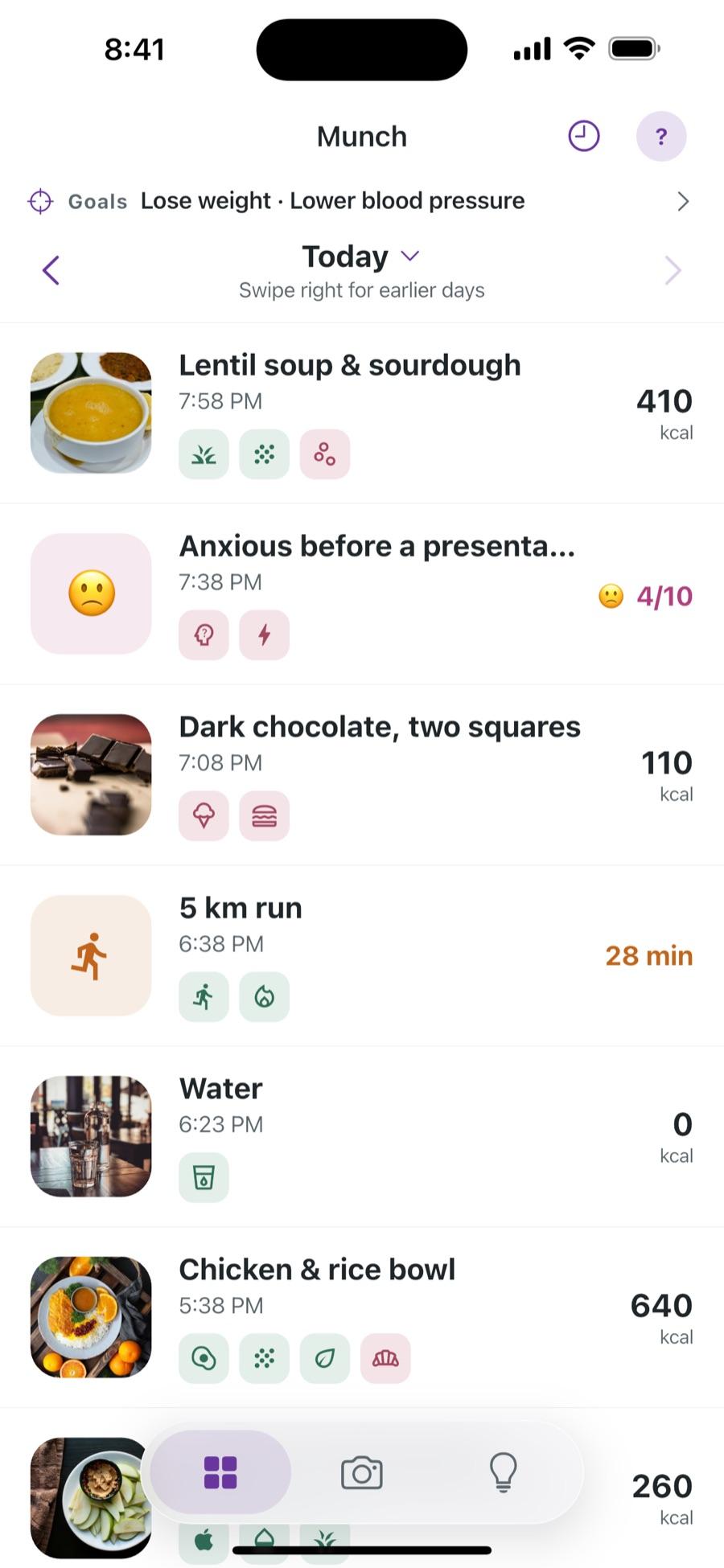
Munch is a health-tracking app for iPhone and Android. You snap, type or say what you ate, how you moved, how you slept and how you feel; Munch does the rest with AI. It gives you a solid estimate of the calories, nutrients and effort, aligns them with your goals, and gives you a clear view of how you're trending against them. All of Munch's insights refer to published research from reputable sources.
Join the waitlist and we'll tell you the day Munch is in the stores. When it is: get the app, sign in and start tracking. We collect data to run Munch for you, never for advertising. Details are in our privacy policy.
You're not a robot. Don't track yourself like one.
Counting every gram, calorie and step is for robots, not people. You set some goals, tell Munch about your day and it does the rest. “Slept badly, then ran 5k” becomes two entries.
| Tracking like a robot | Tracking with Munch |
|---|---|
| Weigh every portion | Snap the plate, with a card beside it for scale if you like |
| Search a database for “chicken, grilled, skinless, 100 g” | Munch names the parts of the meal it sees, and looks up branded products by name |
| Guess when you're not sure | Munch asks — “How was it cooked?” — and you answer or skip |
| Type in the same breakfast every morning | Save it once, log it again in one tap |
| A separate app for workouts, another for sleep, another for mood | Say it once — tap or hold the mic — and Munch files each part |
| Remember to log everything | Munch asks when something's missing, on a schedule you choose |
| Type in your steps and workouts | Your watch imports them through Apple Health or Health Connect |
Your goals don't stop at the plate.
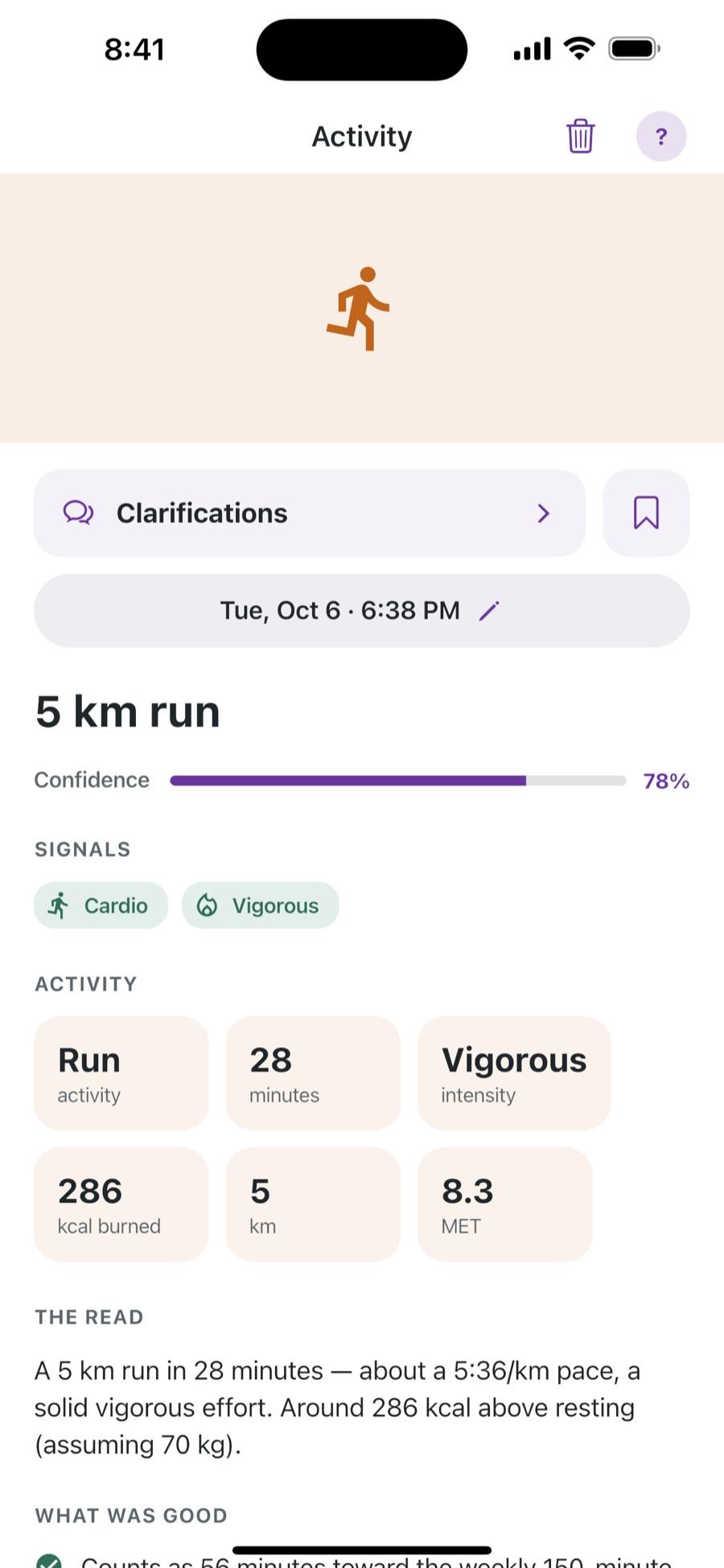
“Lose weight” means eating right — and sleeping enough, moving enough and keeping stress down. Write a goal in your own words and Munch picks the measures research links to it: nutrients, and sleep, active minutes and mood.
- One capture for everything. Voice, typing, photos or Quick Entry. Each entry is analysed, asks a quick question only when it's unsure, and can be corrected.
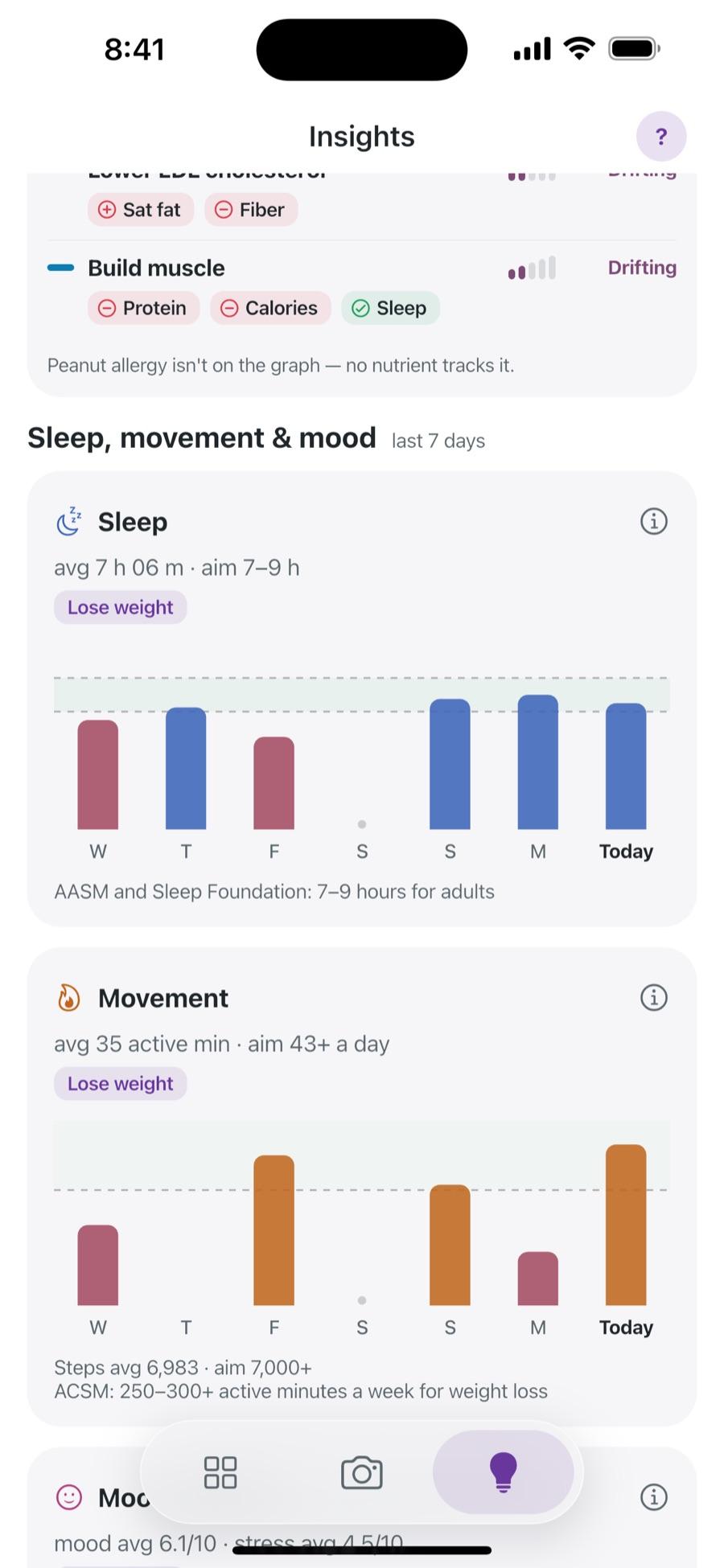
- Sleep, movement and mood on Insights. Your nights, active minutes, steps and check-ins across the week, each charted against a range from published guidance.
- Counted in your goals. The goal lines and the radar include sleep, activity and stress for the goals that depend on them.
- Check-ins, not chores. Munch asks how you slept, how you feel or whether you moved — only when it's missing, and when you said it could.
- Your watch counts. Workouts, sleep and steps come in from Apple Health or Health Connect.
One meal is noise. How you live over time tells the story.
A salty dinner doesn't matter much. Salty dinners five nights a week do. Munch rolls every meal into daily totals and weekly averages, so you see the habit — and watch it move as you change it. The same goes for a short night, or a week without a walk.
Each goal, across the week
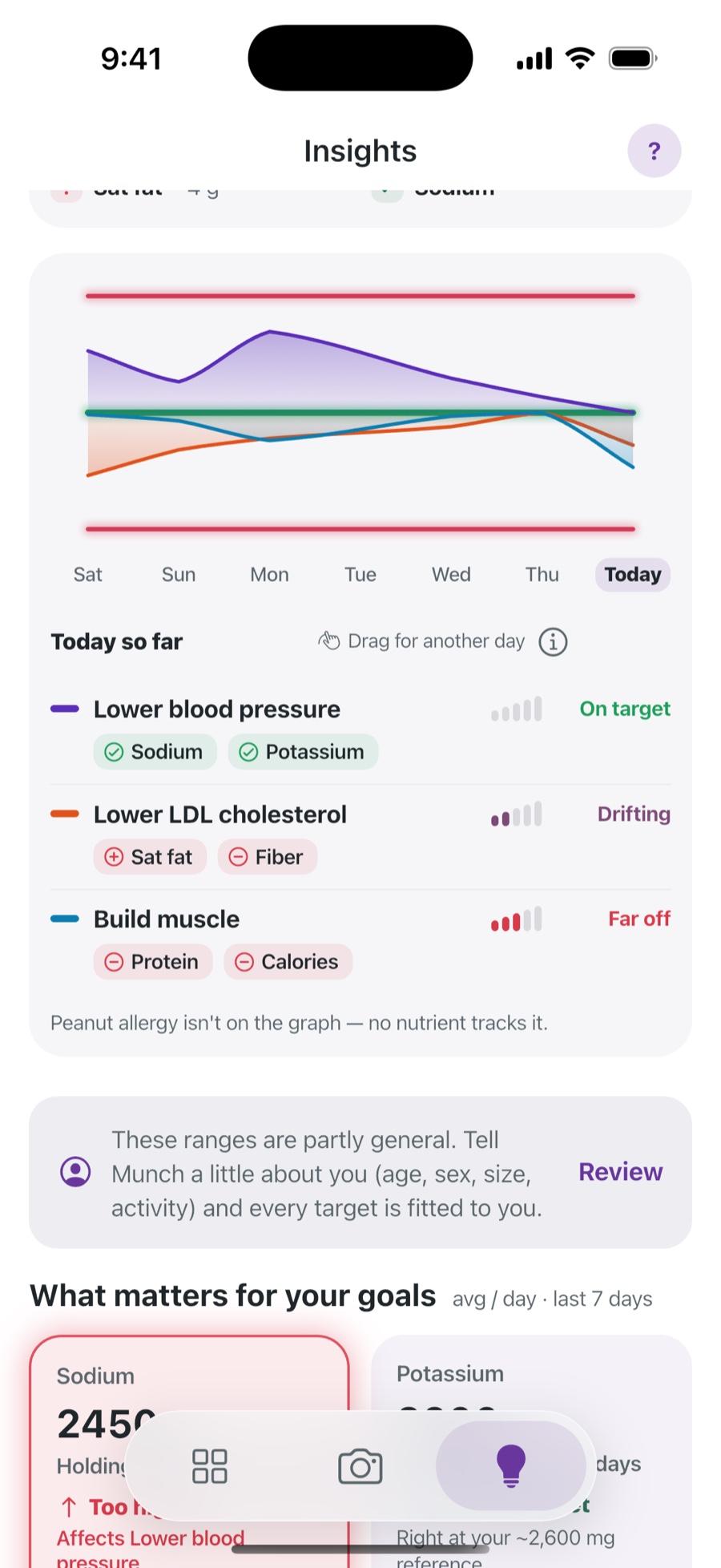
- The green line is on target for that goal.
- The red lines are far off, too much or too little.
- Each goal says where it stands, and which nutrients moved it.
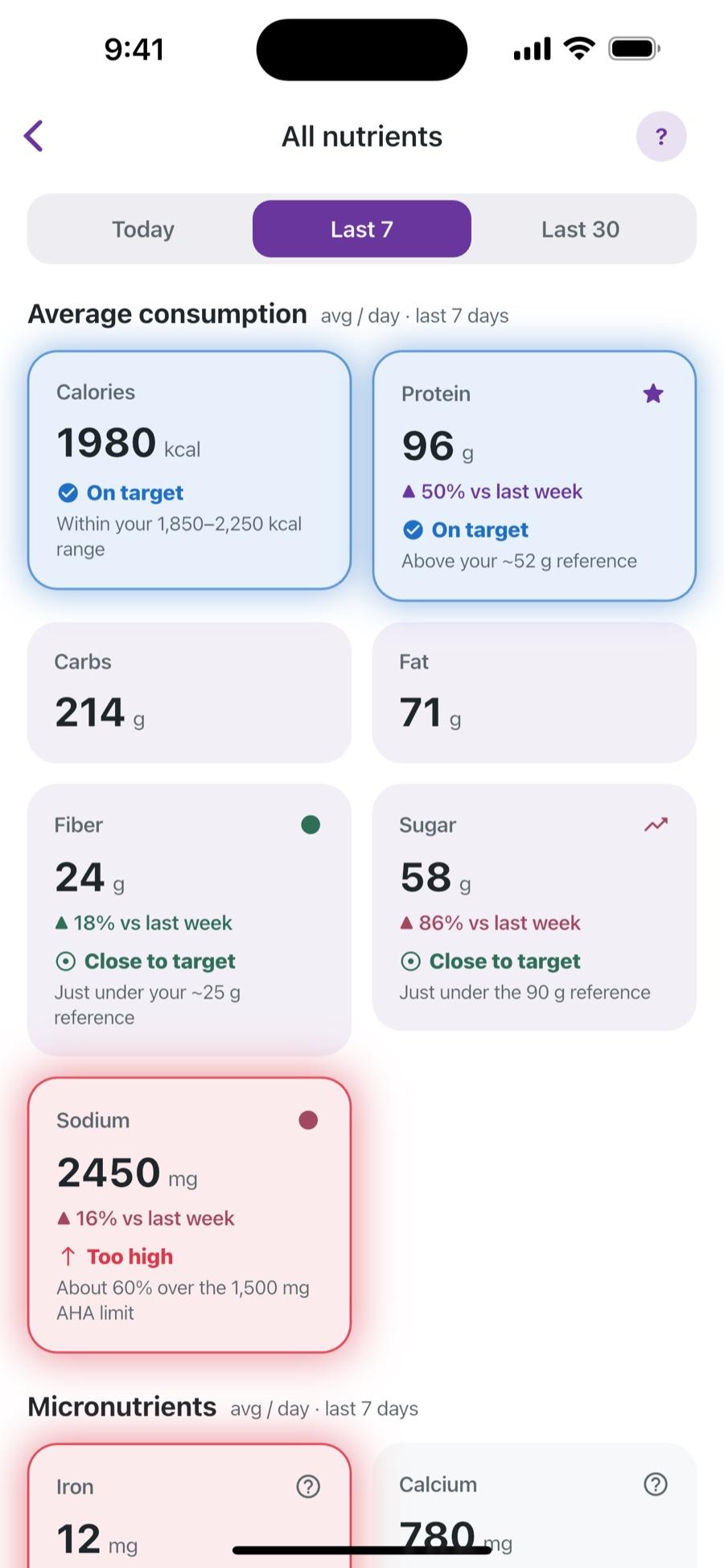
The trend, against last week
Seven- and thirty-day averages for every nutrient, each with how it changed since the week before — so a better habit shows up as a number, not a feeling.
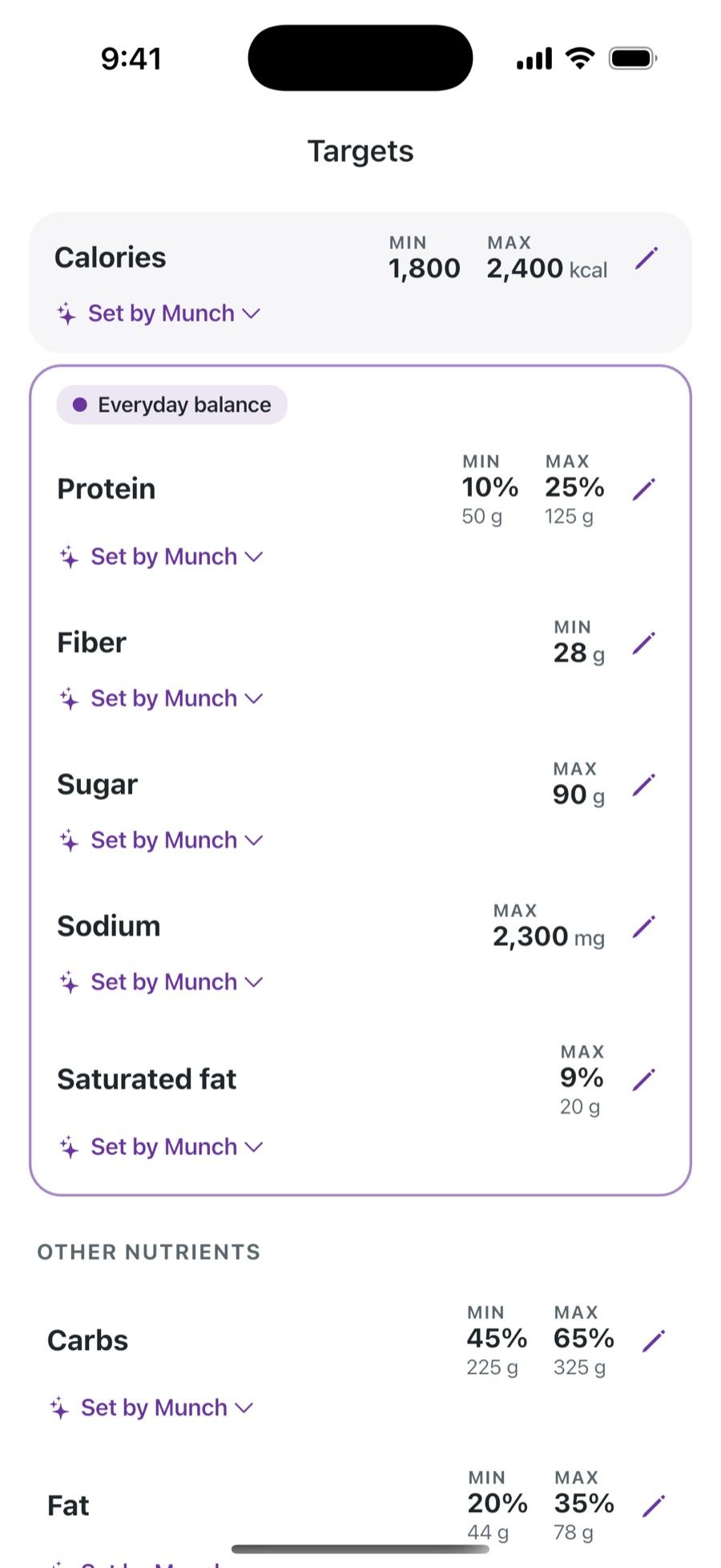
Targets for you, not for an average adult.
Food labels assume one 2,000-calorie adult. Munch asks a few things — age, height, weight, how active you are, pregnancy, conditions like high blood pressure — and your goals in your own words. Then it picks the published reference that fits you — for what you eat, and for how you sleep and move.
| Measure | Munch's range | Reference |
|---|---|---|
| Sleep | 7–9 hours a night for adults (8–10 for teens, 7–8 from 65) | American Academy of Sleep Medicine; National Sleep Foundation |
| Active minutes | 150 a week; 250–300+ when the goal is weight loss. Vigorous minutes count double. | WHO; American College of Sports Medicine |
| Steps | About 7,000 a day (6,000 from 60) | Paluch et al., Lancet Public Health 2022 |
| Workouts | Energy from the activity's MET value, looked up | 2024 Adult Compendium of Physical Activities |
| Mood, stress, energy | Ratings anchored to validated scales | WHO-5 Well-Being Index; Distress Thermometer; Brief Fatigue Inventory |
| Sleep quality | Asked in the words of a standard sleep questionnaire | Pittsburgh Sleep Quality Index |
| Nutrient | Food label | Who | Munch's target | Reference |
|---|---|---|---|---|
| Sodium | 2,300 mg | Has high blood pressure | 1,500 mg | American Heart Association |
| Iron | 18 mg | Man, 19–50 | 8 mg | NIH |
| Iron | 18 mg | Pregnant | 27 mg | NIH |
| Saturated fat | 20 g | Goal: lower my cholesterol | 6% of calories | American Heart Association |
| Added sugar | 50 g | Woman, goal: heart health | 25 g | American Heart Association |
Disagree? Set your own.
Every target says who set it — Munch or you — and opens to show why: the reference behind it and links to the research. Change any of them and Munch shows what it would have set, and what the evidence says about your number.
Protein, carbs and fat are set as a share of your calories and tracked in grams, so the targets always add up.
Insights with sources, not slogans.
Munch's notes put what studies report next to what your own meals show, and link the source. They describe; they don't prescribe.
References Munch draws on include the NIH Office of Dietary Supplements, the National Academies, the American Heart Association, the Dietary Guidelines for Americans, the World Health Organization, the American Academy of Sleep Medicine and the Compendium of Physical Activities.
What research says
Saturated fat and LDL cholesterol
Diets high in saturated fat raise LDL cholesterol. The American Heart Association suggests keeping it to about 6% of calories for people working to lower it.
In your meals
4 of your last 7 dinners went over your saturated-fat range.
Questions
- When can I download it?
- We're finishing Munch now. Everyone on the waitlist gets an email the day it's in the App Store and Google Play.
- Which phones?
- iPhone and Android.
- What will it cost?
- Munch is a subscription, monthly or yearly, with a 7-day free trial for new subscribers. You manage it through the App Store or Google Play.
- How accurate is a photo?
- It's an estimate, and Munch says so. When something changes the numbers — portion size, how it was cooked, a sauce it can't see — it asks a short question you can answer or skip. Keep a gift card, a loyalty card or another everyday object beside the plate and Munch uses it for scale.
- Does it work with my watch?
- Yes. Munch reads workouts, sleep and steps from Apple Health on iPhone and Health Connect on Android. It only reads — it never writes back.
- Do I have to log everything?
- No. When something's missing — how you slept, how you feel, whether you moved — Munch asks, on a schedule you choose, and your answer is the log. Or let your watch fill in the sleep and workouts.
- Is this medical advice?
- No. Munch is not a medical device. It compares what you eat, how you sleep and how you move with published references and shows what research reports, with sources. Decisions about a condition belong with your clinician — and if your care team gave you a number, you can set it as your target.
- What happens to my photos and data?
- They're used to estimate your meals, workouts, sleep and mood, and to build your insights. We don't sell your personal information. The privacy policy has the details. Read the privacy policy.
Get Munch the day it launches.
One email when it's ready. More only if you tick the box.